



Future Skills: What Employees Companies Will Be Looking for Over the Next 5 Years
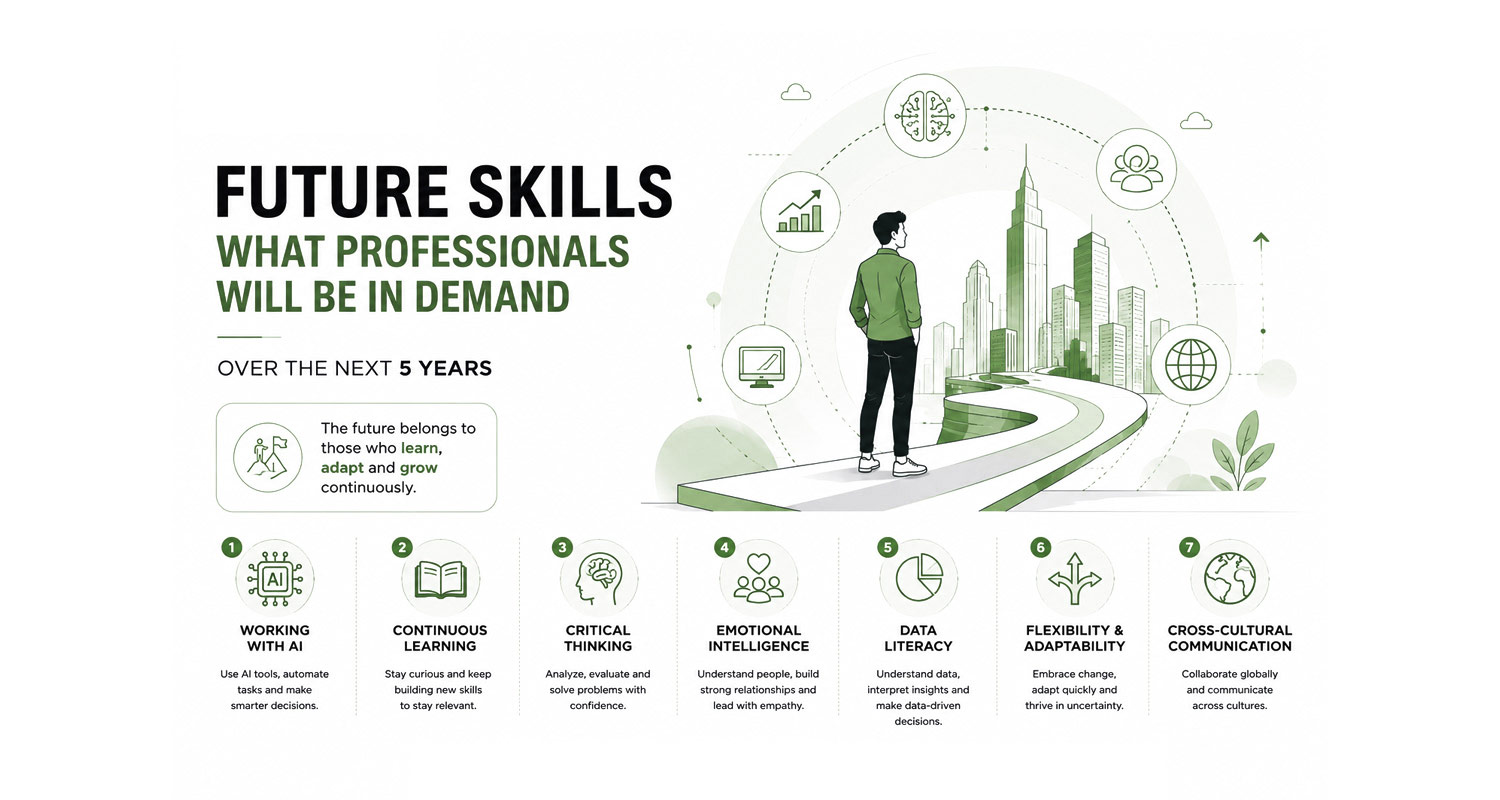
Future Skills: What Professionals Will Be in Demand Over the Next 5 Years
Introduction
The job market is evolving faster than ever before. Advances in artificial intelligence, automation, digital transformation, and global competition are reshaping the way companies hire and manage talent. While technical expertise and experience remain important, employers are increasingly looking for professionals who can adapt, learn continuously, and thrive in a rapidly changing environment.
So, what kinds of employees will companies be searching for over the next five years? Which skills will help professionals remain competitive and valuable in the future workplace? Let’s explore the key trends shaping the workforce of tomorrow.
Why Employer Expectations Are Changing
Technology is gradually taking over repetitive and routine tasks. Artificial intelligence is already helping organizations analyze data, generate content, process documents, and automate communication with customers and candidates.
However, technology is not replacing people entirely. Instead, it is increasing demand for professionals who can work alongside digital tools, solve complex problems, and make strategic decisions.
As a result, employers are placing greater emphasis on adaptability, creativity, and the ability to learn new skills quickly.
Skill #1: The Ability to Work with Artificial Intelligence
Using AI-powered tools is becoming as essential as using office software once was.
In the coming years, companies will favor candidates who can:
- Use AI tools to improve productivity;
- Automate routine tasks;
- Analyze information with the help of intelligent systems;
- Create effective prompts for AI assistants;
- Evaluate and verify AI-generated results.
The goal is not to replace human expertise but to enhance it through technology.
Skill #2: Continuous Learning and Adaptability
The pace of change means that knowledge acquired a few years ago may no longer be sufficient today.
For this reason, employers increasingly value a candidate’s ability to learn and grow rather than focusing solely on current qualifications.
Professionals who actively develop new skills, stay informed about industry trends, and embrace change will enjoy a significant advantage in the labor market.
Skill #3: Critical Thinking
Despite the growth of automation, important decisions still require human judgment.
Companies will continue to seek employees who can:
- Analyze information from multiple sources;
- Identify inaccuracies and risks;
- Evaluate different solutions;
- Make informed decisions in uncertain situations.
In a world flooded with information, critical thinking is becoming one of the most valuable professional skills.
Skill #4: Emotional Intelligence
Technology can automate processes, but it cannot fully replace human interaction.
As a result, emotional intelligence will remain highly valuable across industries.
Key components of emotional intelligence include:
- Effective teamwork;
- Empathy and understanding of others;
- Conflict resolution skills;
- Strong communication abilities;
- Leadership potential.
These qualities are particularly important for managers, HR professionals, recruiters, sales specialists, and customer service teams.
Skill #5: Data Literacy
Modern organizations generate enormous amounts of data every day.
Even employees who are not data analysts are increasingly expected to understand metrics and make data-driven decisions.
Professionals who can:
- Interpret reports and dashboards;
- Understand key performance indicators;
- Identify trends and patterns;
- Use analytical tools effectively;
will be highly valued by employers.
Data literacy is quickly becoming a fundamental skill across nearly every industry.
Skill #6: Flexibility and Resilience
Business environments are changing rapidly, creating a need for employees who can adapt to new circumstances and challenges.
Flexible professionals are willing to:
- Learn new responsibilities;
- Embrace technological change;
- Adjust to evolving business processes;
- Respond effectively to uncertainty.
The ability to adapt quickly often determines long-term career success.
Skill #7: Cross-Cultural Communication
Remote work and international recruitment have made global collaboration more common than ever.
As organizations expand across borders, employees who can work effectively with people from different backgrounds will have a competitive advantage.
Important capabilities include:
- Foreign language skills;
- Cultural awareness;
- Experience working in international teams;
- Strong virtual communication skills.
Cross-cultural competence is becoming a critical asset in the modern workplace.
Professions Expected to Remain in High Demand
Over the next five years, strong demand is expected for professionals in areas such as:
- Software development;
- Artificial intelligence and machine learning;
- Cybersecurity;
- Data analytics;
- Digital marketing;
- Product management;
- Human resources and recruitment;
- Project management;
- Financial technology (FinTech);
- Business process automation.
However, technical expertise alone will not be enough. Employers will increasingly prioritize candidates who combine technical knowledge with strong soft skills.
What Employers Should Do Today
Organizations that want to remain competitive must rethink their hiring strategies.
Instead of focusing exclusively on experience, employers should also assess a candidate’s potential for growth, adaptability, and willingness to learn.
Investing in employee development is equally important. In many cases, upskilling existing team members is more effective and cost-efficient than constantly searching for new talent.
Conclusion
The future belongs to professionals who can combine technical expertise with adaptability, critical thinking, emotional intelligence, and a commitment to lifelong learning.
While artificial intelligence and automation will continue to transform the workplace, human skills will remain essential. Companies that identify, attract, and develop these capabilities today will be better prepared for the challenges and opportunities of tomorrow’s labor market.